Forest or dunes: how to choose a lot in San Antonio de La Pedrera
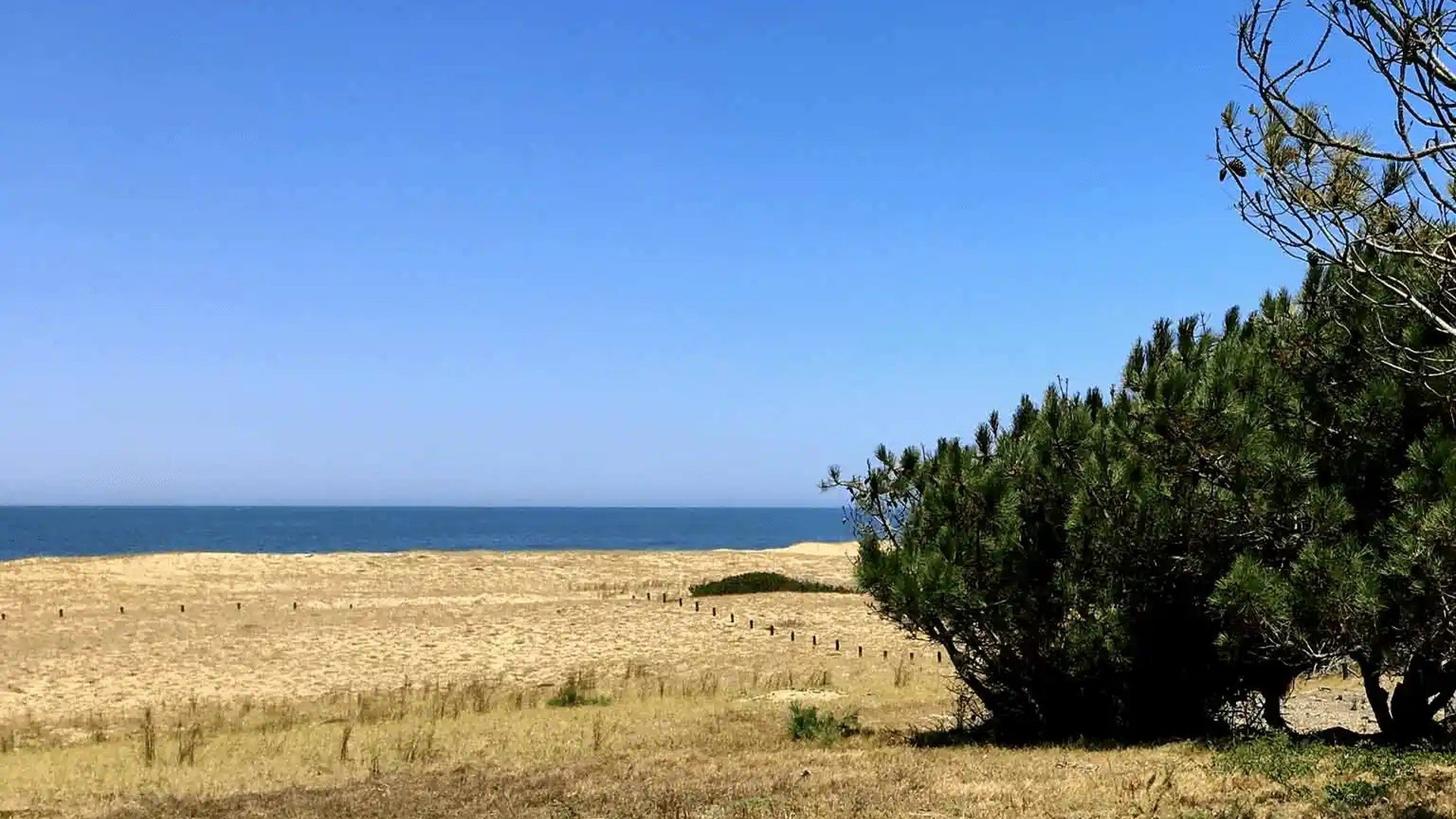
Choosing between forest or dunes in San Antonio de La Pedrera is not just a matter of visual preference. How you plan to use the lot, its orientation, vegetation, wind exposure, access, and the specific situation of each listing must be analyzed together and on site.
This guide organizes that comparison for San Antonio de La Pedrera, on the Atlantic coast of Rocha, Uruguay: what changes between one environment and another, what can only be answered lot by lot, and which questions are useful to bring to the visit. If you are not yet familiar with the place, start with San Antonio de La Pedrera: a forest facing the ocean in Rocha.
1. There is no "better" environment
San Antonio de La Pedrera is an established place, with more than 65 houses built and planning that preserves low density and landscape quality. Within this environment, two different situations coexist: the dunes, where the landscape opens toward the ocean, and the coastal forest, where the vegetation closes the scene. Neither is superior in the abstract: some choose the forest for what it offers, and others choose the dune for what the forest does not provide.
What does exist is an environment more coherent with your way of using the place. Before looking at sizes and prices, it is worth answering three questions: how many months a year you plan to be there, what type of house you imagine, and how much maintenance you are willing to take on. With that clear, the comparison stops being aesthetic.
A useful reference: in San Antonio, the minimum lot size is 800 m². To get to know San Antonio de La Pedrera as a whole, its page gathers map, environment, and the complete selection.
2. Dunes: visual openness and exposure
Listings on the dunes are marketed with ocean views. This is the most important attribute when choosing them, and the one that should raise the most questions.
A dune is an open landscape: horizon present, unfiltered light, sky. On the Atlantic coast, this openness usually comes with wind and salty air, two factors that condition the design, materials, and lifespan of openings and finishes. The vegetation that stabilizes the dune is usually low, which affects the shade and shelter the lot offers as is.
How much of this applies to a specific lot cannot be deduced from the environment: it is measured with the same questions for any listing: what is the real exposure to wind and salt, measured on site and in more than one season? What vegetation has been surveyed and what function does it serve? Are there restrictions on altering the soil or the dune? What technical budget does building and maintaining there imply? The answers may confirm that the exposure is manageable or show a limit.
A caution: the actual view from each lot, its relative height, and the orientation of that front are confirmed on site; a photo of the environment does not say what is seen from a specific point. Dune lots start at 900 m² (USD 190,000) and go up to 1,845 m².
3. Coastal forest: vegetation and privacy
Coastal forest lots offer the opposite relationship. The consolidated vegetation is the protagonist: it filters light, closes views, and creates a seclusion that the dunes do not offer.
In the forest, the ocean is not the backdrop of the house: the vegetation rules. The concrete relationship with the beach (what is seen, how to get there) is confirmed on each lot.
Choosing forest brings its own questions, also comparable: what trees are there, in what condition, and how much is it worth preserving? Where does the clearing open for the house? How are humidity and shade managed in winter? How do roots coexist with foundations and installations? What restrictions apply to clearing or altering vegetation, and how much does it cost to survey and maintain that forest? None of this is decided in advance: it is surveyed on the lot with whoever will design the house, and the rules for altering vegetation are checked before any clearing.
Options in the coastal forest are, today, the most affordable in the selection: from USD 80,000. One of the options in the coastal forest, of 1,138 m², shows the scale of this environment.
4. Orientation and topography: evaluated lot by lot
"Which has better orientation?" is one of the most common questions and the one that can least be answered in the abstract: neither environment has it as a category. Orientation is a property of each lot, not of the forest or the dune.
The same applies to topography. Two neighboring lots can have different slopes, elevations, and drainage, and that difference defines where the house is placed, where it opens, how it is accessed, and what earthworks are needed.
That is why we recommend reading orientation, wind, topography, and access with an architect or engineer, on each specific lot and before deciding: compare with measured data, not with what the environment suggests.
5. The house you imagine and its maintenance
The environment conditions the house, and the house conditions the years that follow.
On the dunes, questions revolve around exposure: what materials resist salt and wind, what protections do the most exposed openings need, how is the sandy soil around the house treated, and what does it imply to leave it closed for several months or to live in it year-round.
In the forest, questions go another way: leaves, branches, humidity, tree care, control of shade on roofs and decks, and how much protection against wind the house needs depending on where it is located. Neither setting exempts you from that evaluation; the type of problem changes, not the need to study it.
None of these scenarios is a rule: they are general trends of the type of environment. Size, lot shape, and the home's program are worked out with the architect; buildability (setbacks, heights, occupancy, minimum buildable area) is confirmed with the current documentation of each lot.
6. Visit and assess the lot with a professional
No photo or render replaces the visit. Going to San Antonio de La Pedrera, five minutes from La Pedrera, allows you to feel the wind in both environments on the same day, see how the light changes between the dune and the forest, walk the real distance to the beach from each lot, and understand its access.
If you can, visit at more than one time of day and more than one season. Bring whoever will design the house, or request an accompanied visit: a Uruguay Sotheby's International Realty advisor coordinates the tour, prepares a map of the listings, and gathers information on each lot.
If you are abroad, a video call is a valid first step to discard options and organize priorities.
7. Compare the listings
The current selection in San Antonio de La Pedrera includes lots on the dunes with ocean views, between 900 and 1,845 m² and from USD 190,000, and lots in the coastal forest, from USD 80,000.
The San Antonio de La Pedrera page has a selector with the tabs All, Dunes, and Forest with listing details, size, price, and location on the map. As a range reference: a lot on the dunes of 1,845 m² is the largest in that group; another lot on the dunes, of 900 m², is in the smallest size range.
Each listing page shows setting, size, price, and availability. What isn't on the listing page (orientation, actual views, services, buildability, exact composition of the listing) is confirmed on the visit, with your architect or engineer and with the notary.
8. Checklist: 10 questions before choosing a coastal lot
Bring them in writing to the visit, the architect, the advisor, and the notary. They do not exhaust the topic but avoid the most frequent omissions.
1. How many months a year will I use the house? It changes the weight of maintenance, exposure, and environment.
2. What do I want to see from inside: the horizon or the trees? It is the fundamental difference between dunes and forest; contrast it with what is seen from each lot.
3. What is the real orientation and where does the prevailing wind come from? It is measured on site and by season.
4. What is the topography like: slope, elevations, drainage? It defines placement, access, and earthworks.
5. What vegetation is there and what environmental or intervention restrictions exist? In the forest and also on the dune, before placing the house.
6. How do you reach the lot, and what condition is the road in? Also consider the construction stage.
7. What services exist, how is sanitation resolved, and what needs to be managed? Energy, water, connectivity: confirmed for this lot, not in general.
8. What can be built: setbacks, height, occupancy, minimum area? Only with current documentation and a qualified professional.
9. What exactly am I buying and what is its legal status? A listing may include more than one parcel: size, boundaries, composition, and ownership are verified with the notary (in Uruguay, the escribano, who reviews title and executes the deed), and the listing, plans, and documentation must match.
10. What is the total budget and what are the terms for reserving it? Price, purchase costs, fees, technical studies, and construction; and what a reservation implies before the notary completes the title review.
A helpful format: a matrix with a column per listing and a row per question, and in each cell "confirmed," "pending," or "document" (exists but must be seen). This way, comparison is made with the same criteria and it is clear what is missing.
These answers help compare; the decision also requires legal, technical, and total budget review.
Forest or dunes? Compare the listings and tell us how you plan to use the place: a Uruguay Sotheby's International Realty advisor helps you narrow the choice.
Ruta 10 km 160.
Complejo Palmas de La Barra local 02.
CP 20000. La Barra, Maldonado, Uruguay.
Forest or dunes: how to choose a lot in San Antonio de La Pedrera
Compare landscape, exposure, vegetation, and usage before choosing between forest and dunes in San Antonio de La Pedrera, Rocha. Practical g..
Punta del Este vacation rentals 2027: where to stay, when to book
Punta del Este vacation rentals for summer 2027: how the peninsula, La Barra, Manantiales and José Ignacio compare, and when to book your st..
San Antonio de La Pedrera: a forest facing the ocean in Rocha
Discover San Antonio de La Pedrera on the Rocha coast: location, landscape, community, and a selection of lots near La Pedrera...