Farms and ranches for sale in Uruguay
17 Properties Found
Uruguay has a long tradition of cattle ranching and crop farming, and official farmland price statistics going back to 2000. This page brings together the farms and ranches we represent across the country, along with what buyers ask most: what a hectare costs, what the CONEAT index measures, how foreigners buy rural land and what to check before signing.
If you are looking for a small rural property near the coast (a chacra in José Ignacio, Garzón or Pueblo Edén), see our farms and country homes near the coast: it is a different market, with different prices.

Large-Scale Equestrian Estate in Lapataia, Punta Ballena
Lapataia | Punta Ballena | Maldonado | Uruguay
1722900 m² total • Living room
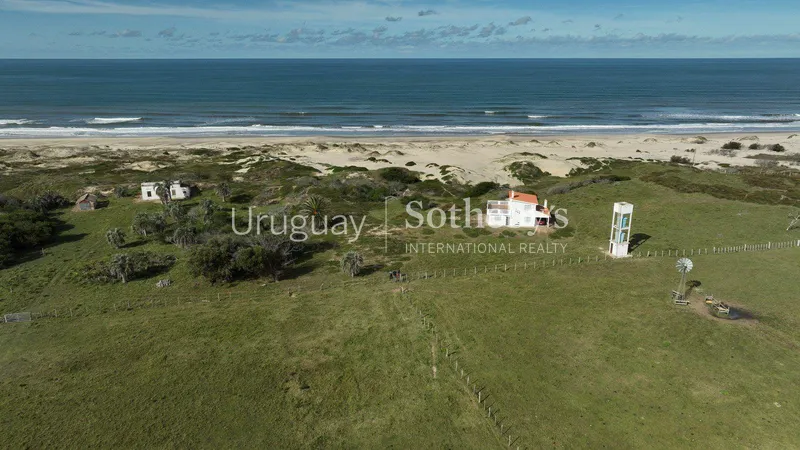
Oceanfront Farm near La Coronilla
La Coronilla | Rocha | Uruguay
699300 m² total

Estancia Yvy Porá
Treinta y Tres | Uruguay

Stunning Uruguayan Ranch in Quebrada de los Cuervos
Treinta y Tres | Uruguay
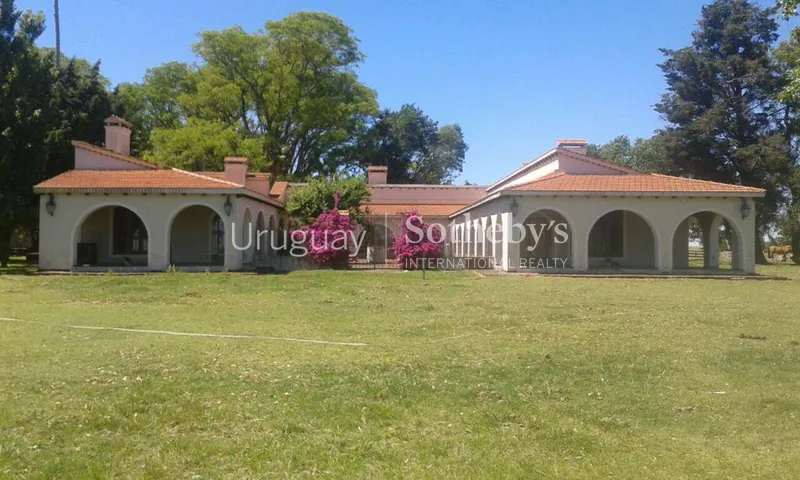
Ranch in San José
San José | Uruguay

196 ha in Laguna del Sauce
Laguna Del Sauce | Punta Ballena | Maldonado | Uruguay
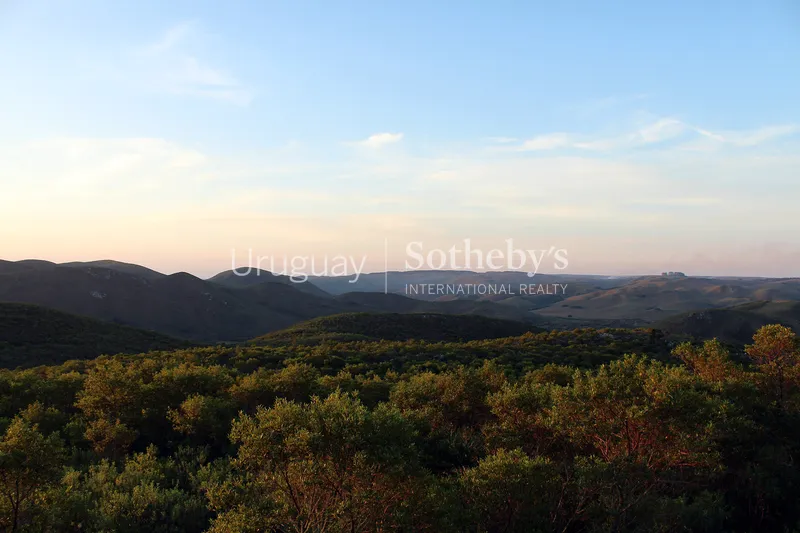
2577 acres Grand Hunting Estate
Treinta y Tres | Uruguay
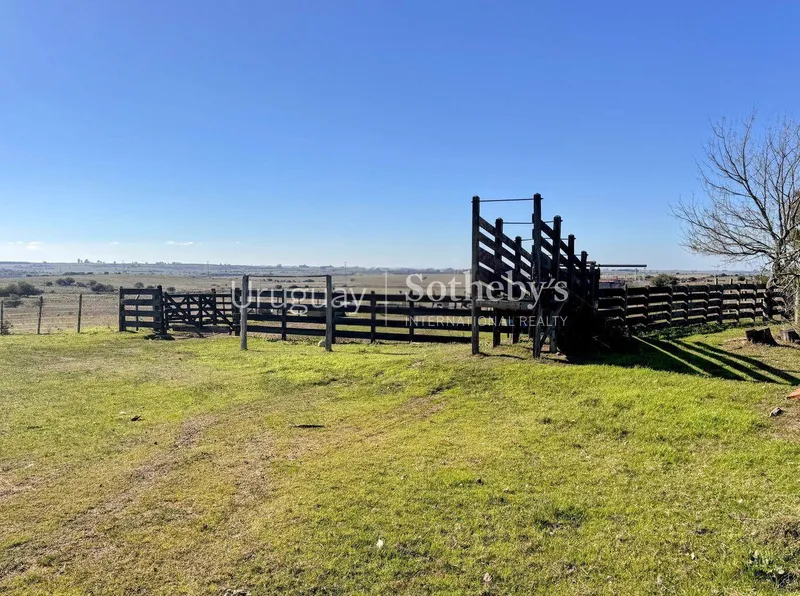
Very good livestock farm in Flores
Flores | Uruguay
Living room
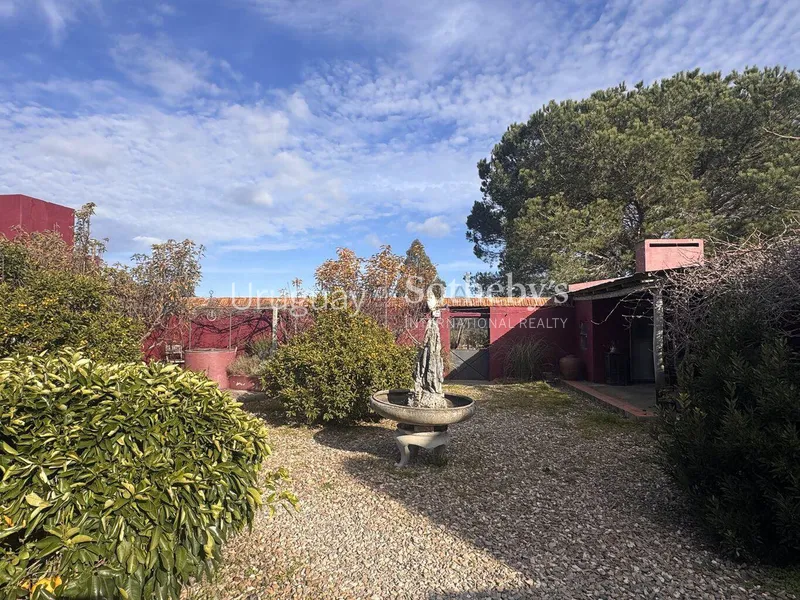
Cattle ranch in the tourist area of Maldonado
Aiguá | Maldonado | Uruguay
5 bed • 3 Bathrooms

Finca ConSentido — Boutique Vineyard Estate of 146 hectares with a historic estate from 1925, Rocha
Rocha | Uruguay
4 bed • 4 Bathrooms • 820 m² total

Riachuelo Field with River and Stream Shoreline
Colonia | Uruguay
400 m² total

Agricultural farm in El Caño
Colonia | Uruguay
Ranch, estancia and chacra: what each term means
In Uruguay, a campo is a working rural property (a farm or ranch), usually from dozens to thousands of hectares, used for cattle, crops, dairy or forestry. An estancia is a large ranch with a main house, staff quarters, barns and improvements. A chacra is a small rural property of a few hectares, mostly used as a country or vacation home: the minimum size for subdividing rural land is 5 hectares (12.4 acres), or 3 hectares (7.4 acres) in Montevideo, Canelones, Colonia, San José and Maldonado.
What a hectare of farmland costs
According to Uruguay's Ministry of Livestock, Agriculture and Fisheries (DIEA), farmland sold for an average of USD 4,178 per hectare in 2025 (about USD 1,690 per acre), the highest level since the series began in 2000: up 5% from 2024 and 27% from 2020. The average is based on 1,718 sales of 10 hectares or more, and it varies widely by department and soil: in 2025, a hectare in Colonia was worth four times as much as one in Artigas.
Department averages can swing from one year to the next where there are few sales: use them as a reference, not as the price of a specific property.
| Department | USD/ha |
|---|---|
| Colonia | 9,707 |
| Soriano | 7,964 |
| San José | 6,842 |
| Canelones | 6,492 |
| Maldonado | 5,647 |
| Florida | 5,265 |
| Río Negro | 5,138 |
| Flores | 4,667 |
| Durazno | 4,032 |
| Rocha | 3,839 |
| Lavalleja | 3,736 |
| Treinta y Tres | 3,384 |
| Cerro Largo | 3,194 |
| Rivera | 3,074 |
| Paysandú | 3,047 |
| Salto | 2,886 |
| Tacuarembó | 2,720 |
| Artigas | 2,300 |
| National average | 4,178 |
Source: DIEA-MGAP, published March 23, 2026
The CONEAT index
CONEAT measures the productive capacity of the soil on each rural parcel; 100 is the national average. It is published by the Ministry of Livestock and can be looked up for free by department and parcel number (padrón) in the ministry's soil viewer. Values range from very low in the eastern hills to more than 200 on the deep soils of the west and south.
It is the most widely used price benchmark: the higher the CONEAT, the higher the price per hectare. Per unit of productivity, however, land with a CONEAT between 80 and 120 costs the least.
| Property CONEAT | Average CONEAT | USD/ha |
|---|---|---|
| < 60 | 47 | 2,820 |
| 60–80 | 69 | 3,382 |
| 80–100 | 90 | 3,628 |
| 100–120 | 107 | 4,159 |
| 120–140 | 131 | 5,885 |
| 140–160 | 149 | 7,108 |
| > 160 | 184 | 8,860 |
Source: DIEA-MGAP, 2025 sales
Leasing versus buying
In 2025, farmland leased for an average of USD 133 per hectare per year, with large differences by use. Many buyers lease their land to local producers while they decide how to run it.
| Use | USD/ha/year |
|---|---|
| Livestock | 85 |
| Mixed crops and livestock | 161 |
| Forestry | 169 |
| Rice | 174 |
| Dairy | 223 |
| Dryland crops | 275 |
| Average | 133 |
Source: DIEA-MGAP, 2025 leases
Regions and land uses
Beef cattle is the main activity on 65% of Uruguay's commercial farmland, and on more than 80% in Artigas, Salto, Durazno, Tacuarembó, Lavalleja and Maldonado. Dryland crops (soybeans, wheat, corn) are concentrated in the west and south, in Soriano and Colonia; dairy in San José, Colonia and Florida; rice in the east, in Treinta y Tres, Cerro Largo and Rocha. Forestry covers about 1.2 million hectares, led by Rivera and Río Negro. In Maldonado, alongside cattle, there are vineyards and olive groves, and near the coast of Maldonado and Rocha, ranches are also sought after for the scenery.
How foreigners buy farmland in Uruguay
Today, the rules do not require Uruguayan citizenship or residency for an individual buying farmland. If a company buys, all of its capital must be held in registered shares owned by individuals, unless the Executive Branch authorizes otherwise. The law also bars companies controlled by foreign governments or sovereign wealth funds from owning rural land.
If a property exceeds 500 hectares at CONEAT 100 (200 in Colonia, Florida, Maldonado and San José; 100 in Canelones), the seller must first offer it to the National Institute of Colonization (Instituto Nacional de Colonización), Uruguay's land settlement agency, which has 20 business days to respond. Buyer and seller each pay a 2% transfer tax on the official cadastral value, withheld by the notary. Rules can change: confirm them with a Uruguayan notary before signing.
What to check before you buy
The CONEAT index and soil map for each parcel; the survey plan and title; water rights (ponds, wells, irrigation) and who holds them; native forest (which cannot be cleared) or soils designated for forestry; road access and rights of way; existing leases; the condition of the main house, barns, fencing and water points; and whether the property must first be offered to the National Institute of Colonization. Our team supports you at every step, together with your notary.
Frequently asked questions
How much does a hectare of farmland cost in Uruguay?
In 2025 the national average was USD 4,178 per hectare (about USD 1,690 per acre), according to the Ministry of Livestock, based on sales of 10 hectares or more. It ranges from about USD 2,300 in Artigas to about USD 9,700 in Colonia, and by soil quality from about USD 2,800 with a low CONEAT to nearly USD 8,900 with a high one.
Can foreigners buy farmland in Uruguay?
Yes. Today, the rules do not require citizenship or residency for an individual buyer. Companies need registered shares owned by individuals (or Executive Branch authorization), and companies controlled by foreign governments or sovereign wealth funds cannot own rural land. Confirm the rules with a notary at the time of purchase.
What is the CONEAT index, and where can I look it up?
It is the official index of the soil's productive capacity: 100 is the national average. You can look it up for free in the Ministry of Livestock's soil viewer, using the department and parcel number.
What is the National Institute of Colonization's right of first refusal?
If a property exceeds 500 hectares at CONEAT 100 (200 in Colonia, Florida, Maldonado and San José; 100 in Canelones), the seller must first offer it to the Institute at the same price and terms. The Institute has 20 business days; if it does not respond, the sale proceeds.
How much does farmland lease for per hectare?
The 2025 average was USD 133 per hectare per year: about USD 85 for cattle, 161 for mixed crops and livestock, 223 for dairy and 275 for dryland crops.
What taxes does a farm pay?
A rural property tax (collected by the department) and a primary education tax, both based on the cadastral value and with exemptions in some cases; the net wealth tax, with an exemption for farming assets held by individuals up to a certain amount; and income taxes on the farming operation. Details depend on each case: consult a Uruguayan accountant.
Does buying a farm give me residency in Uruguay?
It does not grant legal residency. A large real estate investment can make you a tax resident of Uruguay and, since Decree 225/026 (September 2026), a farm also counts toward the real-estate route of the tax incentives for new residents (more than 12,500,000 UI, about USD 2.1 million, bought on or after September 1, 2025): consult an accountant before you buy.
What is the difference between a ranch and a chacra?
A ranch (campo) is a working property of dozens to thousands of hectares. A chacra is a small rural property, from 3 or 5 hectares, used as a country or vacation home; coastal chacras are a different market, with different prices.
Sources
- DIEA-MGAP, Precio de la tierra: compraventas año 2025 (23/03/2026)
- DIEA-MGAP, Arrendamientos 2025 (septiembre de 2026)
- MGAP, Censo General Agropecuario 2024 (24/03/2026)
- MGAP, Consulta CONEAT
- IMPO, Ley 11.029, art. 35 (Instituto Nacional de Colonización)
- IMPO, Ley 18.092 (titularidad de inmuebles rurales)
- IMPO, Ley 19.283 (Estados extranjeros y fondos soberanos)
- IMPO, Decreto 225/026 (régimen de nuevos residentes fiscales)
- DGI, Impuesto a las Transmisiones Patrimoniales
- MGAP, Fraccionamiento de padrones rurales